
6 min read · Published October 17, 2026
Published by Ground & Return
Prepared and published through Ground & Return’s automated editorial process, including generative AI. It was not individually written or reviewed by Amit Gaur. Read our editorial policy.
Should you do yoga barefoot
In most cases, yes. Yoga is usually practised in bare feet, and guidance for people starting alignment-based classes tells them to be prepared for it. The reason is practical rather than ceremonial: the feet are the base of every standing pose, bare soles grip a non-slip mat where an ordinary sock can slide, and you can see and feel what the feet are doing. If you have a foot condition, an injury, reduced feeling in your feet, or a clinician's reason to keep them covered, that is a question for a health professional and a qualified teacher rather than a rule to take from an article.
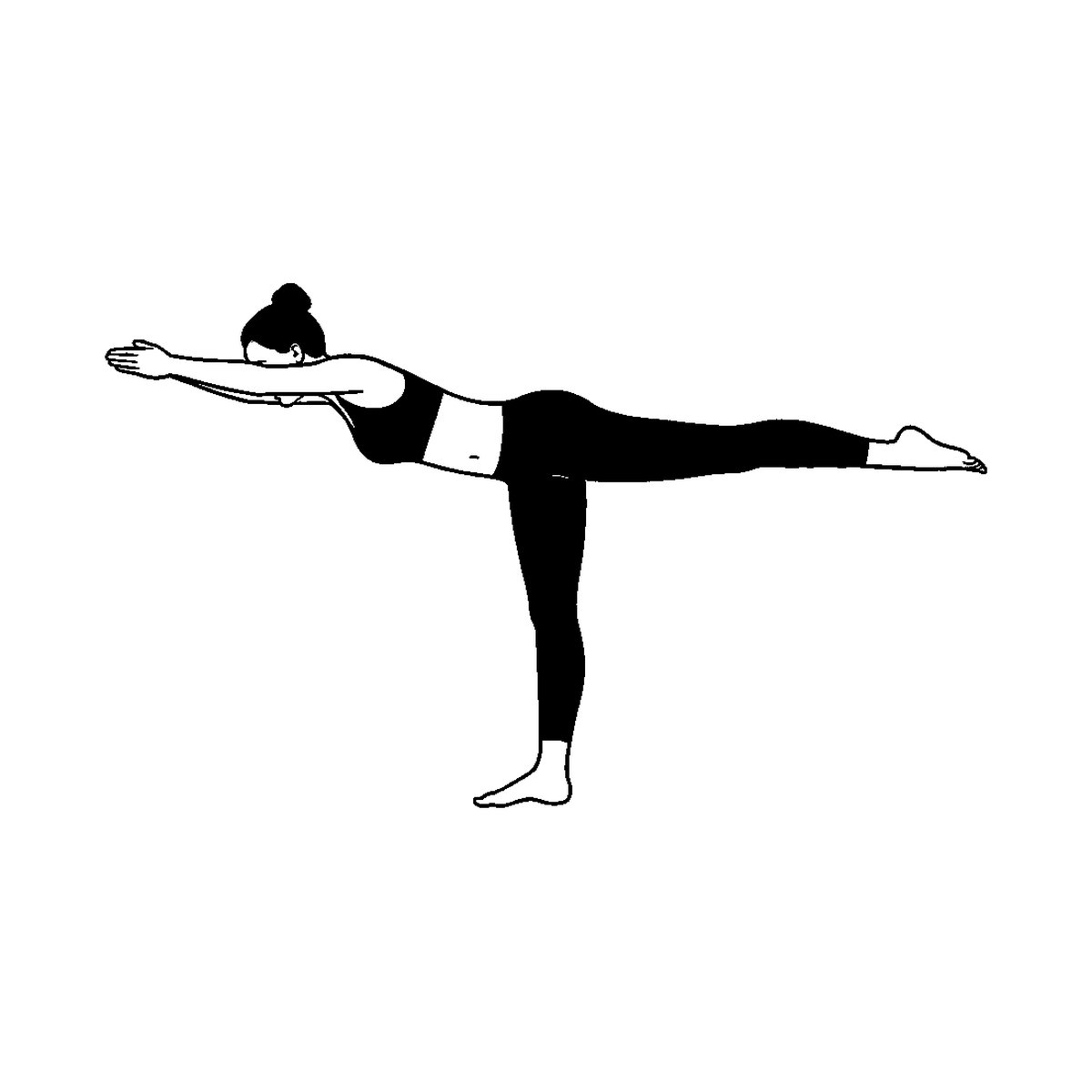
Warrior III
Vīrabhadrāsana III
The short answer, and where it comes from
The short answer is yes, in most cases, and guidance written for people starting alignment-based classes says so plainly. Iyengar Yoga UK, introducing its classes to new students, notes that most people wear a T-shirt and leggings or shorts, and tells them to be prepared to practise in bare feet. That expectation is not a ritual. It follows from what the feet are asked to do.
The same guidance describes standing postures as the place where students learn the fundamentals of adjusting and aligning the body, and calls them the foundation of even the most advanced postures. A standing pose rests on the feet. Whatever the instruction then says about the legs, the hips, and the spine is built on how the feet meet the floor, which is why so much beginner attention starts there.
So the question has two practical parts. The first is grip: whether the feet stay where they were placed when a pose asks them to press, spread, or carry weight. The second is visibility: whether you can see and feel what the feet are doing while the instruction is describing them. Bare feet answer both, and most of what follows is about what changes when something covers them.
What the feet are doing in a standing pose
Beginner instruction tends to begin at the floor. Before anything is asked of the arms or the spine, a standing pose usually says how far apart the feet are, which way each one points, and how the weight is shared between them. Those are small, concrete facts that much of the pose depends on, and they are easier to confirm on a bare foot than through a layer of fabric.
The illustration on this page makes the point plainly. It shows Warrior III, a standing balance in which the whole body is carried over one bare foot. The sole of that foot is the only contact with the floor, so anything placed between the sole and the mat is placed between the pose and its base. You do not need to practise a balance like this for the point to hold; it is simply easiest to see when the base is one foot wide.
The Iyengar Yoga Institute of New York's home-practice guidance suggests practising a pose in several ways, for example Extended Triangle with the front foot up the wall, with the back heel at the wall, or with the back to the wall. Variations like these are described by where a foot or a heel meets something, which is easier to follow with the foot bare and in view. Ground & Return is independent and is not affiliated with the Iyengar Yoga Institute of New York, IYNAUS, or any Iyengar Yoga organization.
Socks, slipping, and the surface underneath
A non-slip mat is there to keep the feet where they were placed. An ordinary sock puts a layer of fabric between the foot and that surface, and fabric can slide on a mat just when the feet are meant to stay put: a wide stance, a step back, a pose in which the hands and feet both bear weight. A foot that creeps outward a little at a time changes the pose without announcing it.
Slipping is the obvious problem, but it is not the only one. When the feet do not trust the surface, it is easy to start holding on with them, curling the toes or bracing the ankles, and that effort is not part of the pose that was described. Bare feet on a mat that does not move let the work go where the instruction put it rather than into staying upright.
The surface under the mat matters too. A mat on a thick rug or a polished floor can move as a whole, and bare skin will not fix that; the answer is a firmer floor, not different socks. If you are considering socks with a gripping sole, the honest comparison is with bare feet on a mat that does not slide, and what such socks cannot restore is the other half of the question: being able to see the foot.
Seeing the feet, and letting them be seen
The second reason for bare feet is that you can look at them. Before a standing pose, a glance down answers the questions the instruction asked: whether the feet are as far apart as described, whether the toes point where they should, whether one foot has turned without your noticing. A sock blurs those answers, and a trouser hem that falls over the feet hides them altogether.
The same is true for anyone helping you. Iyengar Yoga UK asks students joining an online class to set up the camera so that the teacher can see them, and to make sure there is nothing nearby that could cause an accident. Online, a teacher can correct only what the camera shows, and clothing that covers the feet or the knees takes away part of what there is to see.
At home you are mostly your own observer, which makes this matter more rather than less. The Iyengar Yoga Institute of New York's guidance describes a home practitioner who may at first hear a class teacher's voice reminding them to lift the kneecaps or extend the elbows. A reminder like that is easier to act on when the knees are in view, and that is the practical case for clothing that leaves them visible.
What to wear with bare feet
Clothing follows the same logic as the feet. Iyengar Yoga UK's note that most people wear a T-shirt and leggings or shorts describes something close to the figure in this page's illustration: a fitted top, legs whose shape can be seen, and nothing below the ankle. The point is not a uniform. It is that what you wear should not hide the parts of the body the instruction is talking about.
A few practical tests settle most choices at home. Trousers should stay above the ankle rather than pooling over the feet or catching under a heel when you step. A top should stay in place when you fold forward or raise the arms, so that you are not adjusting it between poses. A thick waistband, a belt, or a zip is best left for another day if your sequence includes lying on your back or folding at the hips.
For anything more particular, ask the person who teaches you. Iyengar Yoga UK says that teachers will answer questions about the equipment and clothing a class requires, and the same holds for home practice. If your material or your teacher asks for something specific, follow that rather than a general rule.
When a teacher or a condition changes the answer
Bare feet are a default, not a requirement that outranks your circumstances. A foot or ankle injury, a wound or a skin condition, reduced feeling in the feet, or an instruction a clinician has already given you about your feet all come before general yoga advice. In those cases the useful step is to ask, rather than to choose between an article and the person who knows your situation.
IYNAUS is explicit that general home-practice material does not suit every person or condition, and it directs open questions to a certified teacher. Whether your feet should be bare or covered in a particular pose, or whether that pose belongs in your home practice at all, is that kind of question, because the answer depends on the person rather than on the pose. Ground & Return is independent and is not affiliated with the Iyengar Yoga Institute of New York, IYNAUS, or any Iyengar Yoga organization.
Iyengar Yoga UK makes the same point from the teacher's side. It asks new students to tell the teacher about medical conditions, naming back, neck, and knee problems among others, so that the teacher can offer adaptations or alternative poses. Anything about your feet, ankles, or knees that a teacher ought to know belongs in that conversation before you settle into a habit at home.
Signals that end a session, bare feet or not
The National Center for Complementary and Integrative Health advises practising with qualified guidance and taking extra care if you are new to yoga or have individual health considerations. It notes that the most common yoga injuries are sprains and strains, and that the knee or lower leg is the part of the body most often injured. That is a reason to take the footing of a pose seriously, though it is not evidence that bare feet prevent injury, and nothing here claims they do.
NCCIH also lists balance issues among the health conditions that may call for modifications in yoga, alongside preexisting injuries such as knee or hip injuries, and it advises people with health conditions to talk with their health care providers and their yoga instructor about their individual needs. That advice plainly applies to a balance on one foot, and to any standing work if your ankles or knees are already a concern.
Pain, sharpness, numbness, dizziness, and instability are reasons to come out of a pose calmly and stop, whether your feet are bare or covered. NCCIH also notes that learning yoga on your own without supervision has been associated with increased risks, which is a good reason to keep home practice to material you have been taught. Yoga, and any app that carries it, should never be used to postpone medical care.
How Ground & Return fits a barefoot practice
Ground & Return is an iPhone app built around one complete 28-week syllabus of 196 daily sessions, with 110 illustrated pose references and method notes beside them. Pacing is manual, so a session waits while you set the phone down, step onto the mat, and check your feet before a standing pose, rather than moving on without you. The core material is available offline, progress and practice notes stay on the device, there is no account and no subscription, and a daily reminder is optional.
What it cannot do is the part this question turns on. The app cannot see your feet, tell whether a sock or a mat is slipping, judge whether the floor you are standing on is safe for a balance, or decide whether something about your feet, ankles, or knees means you should practise differently. It holds the sequence, the pose references, and your place in the path; judgements about footing and clothing belong to a qualified teacher, and anything involving an injury, reduced feeling, or another health condition belongs with a health professional.
Three common questions
Can you do yoga in socks? You can, but an ordinary sock can slide on a mat and covers the part of a standing pose that most instruction starts from, so bare feet are the better default for standing work. If you have a reason to keep your feet covered, ask a qualified teacher how to arrange your practice around it rather than working it out alone.
What should you wear for yoga at home? Something you can move in that leaves the ankles and knees visible and stays in place when you fold forward or raise the arms, such as a T-shirt with leggings or shorts, and nothing on the feet. If your material or your teacher asks for something specific, follow that instead.
What if your feet get cold? Warm the room or add a layer above the ankle before reaching for socks, since standing work is where bare feet matter most. A reclining rest at the end of practice is different, and whether to cover the feet there is a small question for your teacher. Feet that are persistently cold, numb, or painful are a question for a health professional rather than a choice of socks.
The plain answer is unglamorous: practise barefoot on a mat that does not slide, wear something that keeps the feet and knees in view, stay warm with layers rather than socks during standing work, and let a qualified teacher or a health professional settle anything about your feet that a general rule cannot.
