
6 min read · Published October 11, 2026
Published by Ground & Return
Prepared and published through Ground & Return’s automated editorial process, including generative AI. It was not individually written or reviewed by Amit Gaur. Read our editorial policy.
Do you need to be flexible to do yoga
You do not need to be flexible to start yoga. Beginner practice starts from the range you have, and alignment-based teaching uses props such as blocks, belts, and folded blankets to bring a pose within reach rather than expecting you to arrive with it. Flexibility is not the entry requirement, and it is not the measure of a pose done well; the arrangement the instruction describes is. If you are unsure whether a pose suits your body, or your stiffness comes with pain, an injury, or a diagnosed condition, that is a question for a qualified teacher or a health professional rather than a reason to wait.
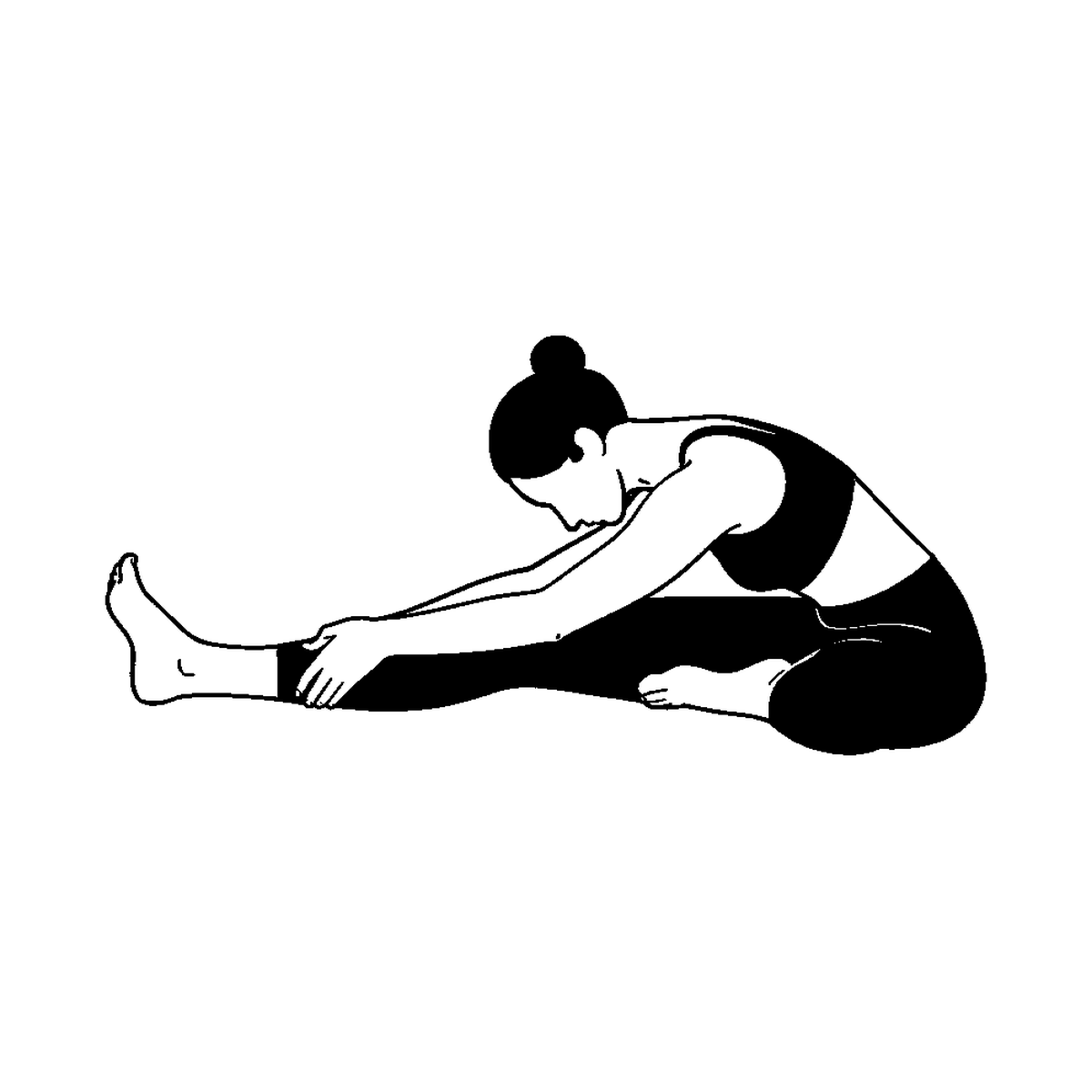
Head-to-Knee
Jānu Śīrṣāsana
The short answer, and why the question comes up
The short answer is no. Flexibility is not an entry requirement for yoga, and in beginner material it is not even the main subject. A beginner pose is mostly a set of arrangements: where the feet go, which way the hips face, what the legs and arms are doing, how the pose is entered and how it is left. Those can be practised at the range you have today, and none of them waits for more range.
The question comes up because of what yoga looks like in pictures. Photographs tend to show the far end of a pose: the torso folded flat along the legs, the hands wrapped around the feet, the legs drawn into a tight cross-legged seat. An image like that shows where a pose can go rather than where it starts, and it says nothing about how long the person in it has practised or what support they used.
It is also a documented worry rather than a private one. The National Center for Complementary and Integrative Health describes a small 2021 survey of U.S. Hispanic adults with low incomes in which concern about the need for physical flexibility was among the perceived barriers to yoga, noted especially among people with no prior experience of it. That is the moment the worry is least informed: before anyone has seen what a beginner pose actually asks for.
What limited range looks like in a beginner pose
Not flexible is a large phrase for a few small, specific things. In a beginner sequence it tends to mean hands that stop short of the floor in a standing forward bend, a back that rounds when sitting upright with the legs out in front, knees that stay well above the floor in a cross-legged seat, or a seated fold that ends with the head nowhere near the knee.
Each of those is a distance problem rather than a verdict. The floor is further away than the pose assumes, or the hips sit lower than they need to for the back to lengthen, or the hands do not meet where the shape expects them to. A distance problem has a practical answer, which is to change the distance: something under the hand, something under the hips, something that extends the reach of the arms.
The illustration on this page makes the point plainly. It shows Head-to-Knee, a seated forward bend whose name describes the head coming to the knee, drawn with the hands resting on the shin and the head well short of the knee. The name describes where the pose travels; the drawing shows it partway along, and partway is an ordinary place for a pose to be.
Props are part of the method, not a concession
Alignment-based teaching plans for limited range rather than treating it as something to fix before you are allowed in. IYNAUS describes Iyengar Yoga as accessible for all ages and all body types, names the use of props alongside precision, timing, and sequencing as part of its focus, and says its certified teachers are skilled in using simple props, providing support to the less flexible and extra extension to the more advanced student.
That last phrase describes the same props doing opposite jobs for different people. A block under the hand of one practitioner and a block used to give another more extension are both the method working as intended, and neither is a lesser version of the pose. The prop is chosen for the body in front of the teacher, not for a level the practitioner is supposed to have reached.
Which prop, at what height, in which pose, is the kind of judgement that belongs to a teacher who can see you. A general article can say that blocks, belts, and blankets exist and what they are for; it cannot say what your body needs in a particular pose on a particular day. Ground & Return is independent and is not affiliated with the Iyengar Yoga Institute of New York, IYNAUS, or any Iyengar Yoga organization.
Range is the material, not the test
It helps to separate two things the word flexibility gets used for. One is range: how far a joint or a stretch will go today. The other is arrangement: whether the pose is set up the way the instruction describes, with the legs working, the spine lengthening rather than collapsing, and the breath ordinary. Range decides how far a pose goes. Arrangement decides whether it is the pose that was taught.
IYNAUS describes what students learn from certified teachers as the poses, the correct alignment for the poses, and the principles of sequencing. Range is not on that list. That corrects the picture many people bring with them, in which the point of a pose is how far it goes and anything short of the photograph is a failure.
Range also moves, which makes it a poor entry test. It differs between the two sides of the body, from one week to the next, and across the day; the Iyengar Yoga Institute of New York notes in its home-practice guidance that in the morning the body may be stiff, but the mind is quiet and receptive. A practice that waited for range before beginning would be waiting on a number that does not hold still.
The real risk is forcing, not stiffness
If limited range is not the problem, the thing to watch is what you do about it. The tempting mistake is to close the gap by force: pulling on the feet to deepen a fold, rounding the back so the head comes down, pressing a knee toward the floor because the picture shows it there. Each of those produces something that looks closer to the photograph and is further from the instruction.
Some poses ask for range that a beginner should not try to force at all, and published safety guidance says so. The National Center for Complementary and Integrative Health advises people who are new to yoga to avoid extreme practices, and it names the lotus position on that list alongside headstands, shoulder stands, and forceful breathing. Lotus is a telling inclusion, because it is the cross-legged seat many people picture when they picture yoga at all.
The sensible course is to practise at the range you have, with the support your material specifies, and to leave anything that would need forcing to a teacher. The Iyengar Yoga Institute of New York suggests starting a home practice with a few poses you know and feel confident with, and saving the ones you do not feel confident with for class, where you can be supervised. Poses that depend on range you do not yet have belong in that second group.
Starting from where you are at home
For a home practitioner the practical version is short. Begin with beginner material from qualified instruction or a trustworthy published source, use the props it names at the heights it describes, and judge each pose by whether you can arrange it as written rather than by how far it goes. If the material assumes a range you do not have, treat that as a question to ask rather than a gap to close by pushing.
The habit to watch is comparison. Measuring a pose against a photograph, against someone else, or against your own best day turns range back into a test, and a test invites force. The comparison that teaches something is between the pose you did and the pose that was described, and that comparison works at any range.
Be patient with the word beginner, too. A practice begun at a limited range is not a practice waiting to start; it is the practice, following the same method a more flexible person would follow with different support. The difference is in the props and the heights, not in whether the practice counts.
When stiffness is a question for someone else
Stiffness that arrives with pain, follows an injury, belongs to a diagnosed condition, or has changed suddenly is a question for a health professional before it is a question about yoga. The opposite case deserves the same care: easy range is not a reason to push further, and a joint that moves in a way that worries you belongs with someone qualified rather than in a pose.
The National Center for Complementary and Integrative Health advises that pregnant women, older adults, and people with health conditions talk with their health care providers and their yoga instructor about their individual needs, because some poses and practices may need to be avoided or modified. It also notes that learning yoga on your own without supervision has been associated with increased risks, which is a good reason to treat home practice as a companion to qualified guidance rather than a replacement for it.
IYNAUS is explicit that poses suggested for home practice will not be appropriate for every student and every condition, and it encourages anyone with questions about practising at home to seek advice from a certified teacher first. Pain, sharpness, numbness, dizziness, and instability are reasons to come out of a pose calmly and stop, whatever your range. Yoga, and any app that carries it, should never be used to postpone medical care. Ground & Return is independent and is not affiliated with the Iyengar Yoga Institute of New York, IYNAUS, or any Iyengar Yoga organization.
How Ground & Return fits a practice with limited range
Ground & Return is an iPhone app built around one complete 28-week syllabus of 196 daily sessions, with 110 illustrated pose references and method notes beside them. Foundation, the first 12 weeks, starts with essential work and builds gradually, and pacing is manual, so a session waits while you fetch a block or refold a blanket rather than moving on without you. The core material is available offline, progress and practice notes stay on the device, there is no account and no subscription, and a daily reminder is optional.
What it cannot do is the part this question turns on. The app cannot see how far your hands reach, tell whether a fold is coming from the hips or from a rounding back, choose a prop or a height for your proportions, or decide that a pose should wait until a teacher has introduced it. It holds the sequence, the pose references, and your place in the path; judgements about range and support belong to a qualified teacher, and anything involving pain, injury, or a health condition belongs with a health professional.
Three common questions
Can you do yoga if you cannot touch your toes? Yes. Hands that stop above the floor or short of the feet are an ordinary place to start, and alignment-based teaching meets them with support, such as a block under the hands or a belt around the feet, rather than with an expectation that you push further. What matters is whether the legs and back are arranged as instructed, not whether the fingertips arrive.
Will yoga make you more flexible? This article will not promise it, and it does not need to. Flexibility is not required to begin, and IYNAUS describes Iyengar teaching as oriented toward gradual but steady progress rather than quick results. Treat any change in range as something to notice rather than a target to chase, and judge the practice by how well the poses are arranged, which does not depend on it.
Is using a block or a belt a sign you are doing it wrong? No. In alignment-based practice, props are part of the method rather than a concession, and the same block that supports one person gives another more extension. The useful question is not whether you use a prop but whether you are using the one your material or your teacher specifies, at the height they describe.
The plain answer is unglamorous: start at the range you have, use the support your material names, never force a pose toward a picture, and let a qualified teacher settle anything that would ask for more than the body you brought.
